Connect centre management, tenants, staff, security and retailer head office, with clear responsibility from the first report to the final outcome.
To improve shopping centre communication, give tenants and staff a clear way to report issues, assign responsibility for the response, and keep authorised stakeholders informed through to resolution. Use targeted updates for the people affected, and give management access to the incident history needed for follow-up.
Consider a familiar situation: a shop employee calls for assistance, security starts responding, centre management receives a separate call, and the store manager messages head office. When someone asks what is happening, the answer depends on finding the right person.
What would change if those participants could follow the same incident, with the information and permissions appropriate to their roles?
NevaSolo Enterprise for shopping centres connects incident reporting, security response, targeted broadcasts and authorised management oversight. It gives different organisations a shared process for coordinating the situations they need to handle together.
One venue. Different organisations. A coordinated response.
Explore this guide
- Why communication breaks down
- The operational consequences
- Reaching tenants and retail staff
- Reporting incidents to security
- Sending targeted updates
- Head-office visibility and privacy
- See a coordinated incident
- Software demonstration checklist
- Getting started and measuring value
- FAQs, pricing and access
- Request a venue demonstration
Why does communication break down in a shopping centre?

Shopping centre communication crosses organisational boundaries. The centre manager, security provider and retailer may each have their own systems, supervisors and reporting requirements. A useful communication plan explains how those responsibilities connect.
Think about a hazard near a tenancy entrance. The employee needs to report its location. The response team needs enough detail to act. Centre management needs to establish responsibility. Other tenants may need access instructions. The retailer’s head office may need to understand the impact on its store.
Safe Work Australia’s guidance on coordinating with other duty holders specifically uses a large shopping-centre owner and its retail businesses as an example where formal coordination arrangements may be needed. Under the model WHS framework, overlapping responsibilities call for consultation, information exchange and coordinated action. Apply the requirements relevant to your jurisdiction.
| Participant | Practical requirement |
|---|---|
| Centre management | Understand relevant incidents across the centre, who is responsible and what requires attention. |
| Security managers and guards | Receive usable incident details, accept assigned work and maintain response updates. |
| Tenant and store managers | Follow authorised store incidents and receive relevant centre communications. |
| Retail staff | Report issues and follow updates on incidents they are authorised to access. |
| Retailer head office | Oversee relevant incidents at explicitly assigned locations. |
Start by reviewing one recent incident. Identify where information moved between organisations and where someone had to chase an answer. Those handovers give you a practical starting point for improvement.
For the centre manager, the opportunity is to spend less time relaying messages between businesses. For the security manager, it is to make the team’s work visible. For the tenant, it is to know where to turn and how to follow the response. Design your process around those outcomes.
What problems can poor venue communication create?
Unclear communication can leave a report awaiting confirmed ownership, require staff to repeat information and make later review dependent on individual recollections. These are the gaps to examine in your own venue.
Reports need accurate information and follow-through
The Australian Bureau of Statistics recorded 247,425 theft victims at retail locations in 2025, excluding motor vehicle theft. Retail locations accounted for 43% of that national category. The ABS definition of a victim varies by offence and can include a person, premises or organisation.
Nationally, the category fell by 2% that year. The figures nevertheless show a substantial continuing retail theft burden, and a reason to take reporting and follow-up seriously.
Queensland Police advises businesses to report shoplifting incidents and provide accurate information about what happened. A structured internal record can support that task by keeping the location, circumstances and actions taken together.
The reporting employee needs to see what happens next
WorkSafe Victoria identifies complicated reporting processes and expectations that reports will be ignored among barriers to reporting aggression or violence. Its guidance recommends accessible reporting and a transparent response process.
For your centre, the practical question is whether a staff member can identify the response and receive appropriate follow-up. NevaSolo’s incident workflow provides a place to record responsibility, updates and the outcome.
For the broader context, read our guide to shopping centre safety in Australia.
How can centre management improve communication with tenants and retail staff?
Give each participating tenant a clear reporting route, current staff access and a defined way to receive relevant operational updates. Make that process part of onboarding and practise it with the people who work on the floor.
Reach the people who need to act
A loading-bay change needs to reach the team receiving deliveries. An access restriction needs to reach the stores affected. An incident update needs to reach the people authorised to follow the response.
Plan audiences around those tasks. Ask each tenant to identify who maintains its staff access, who receives management-level updates and who needs to participate in incident reporting.
Build continuity into the process
Staff onboarding should cover how to raise a report, which details to include and where to find subsequent updates. Review access when employees change roles or leave, and include the communication process in manager handovers.
NevaSolo Enterprise supports participation by tenant administrators and staff alongside the centre and security team. Define each user’s access around their tenant, responsibilities and permitted incidents.
A useful test is to ask a newly onboarded employee to explain how they would report an issue and find out who is handling it. Their answer will show where your instructions or setup need attention.
How should tenants report incidents and coordinate with security?
Use a workflow that makes the report, responsible responder, progress and outcome visible to authorised participants:
Report → route → accept → update → resolve → review.
The SDA’s December 2025 customer abuse and violence research illustrates why follow-through matters. Among 1,896 respondents who had reported incidents, 51% selected “No action that I am aware of” when asked what action followed their report. This measures awareness of action.
Separately, among 2,337 respondents who had experienced abuse or violence, 62% said confidence that action would be taken would encourage them to report all incidents. The study analysed 2,592 completed responses from an open SDA-member survey, with self-selection and self-reporting limitations.
Capture information the responder can use
Identify the tenant or location, what has happened, the current situation and the assistance required. Include relevant notes or media when appropriate and safe. Follow your venue’s emergency procedures and use Triple Zero when an emergency requires police, fire or ambulance.
Make responsibility explicit
Route the report through the venue’s configured response arrangements. In NevaSolo, assignment and acceptance help authorised participants follow who has taken responsibility. Treat acceptance and physical attendance as separate events when evaluating the response.
Keep the outcome connected to the report
Record relevant updates as the situation develops. An authorised user can record resolution, with notes documenting the outcome and further action required. Where work continues across a shift change, use that history to support the handover.
For the reporting employee, the useful result is knowing the issue has an owner. For security, it is a clear record of the response. For management, it is information to review and act on.
Explore how NevaSolo’s incident workflow works.
How can you send updates to the right tenants and teams?
Select the audience according to who is affected and what they need to do. NevaSolo Enterprise supports targeted broadcasts for authorised users, with audience and area options governed by the sender’s permissions.
A centre-wide operational update may need broad distribution. A loading-bay closure may concern selected tenants. A disruption near one store may call for practical instructions to neighbouring businesses.
Think about the difference between sending a notice to one store manager and reaching the relevant, authorised staff participating in the venue’s communication process. Establishing that audience before an issue arises is part of the operational preparation.
Give each update a clear structure: what has changed, who is affected, what action is required and where to find further updates.
Illustrative operational notice: Loading Bay B is temporarily closed for inspection. Affected tenants should use Loading Bay A for deliveries until further notice. Centre management will issue an update when access changes.
Keep detailed incident information within the authorised incident audience. Other affected tenants can receive the operational instruction relevant to them.
For emergency arrangements, Safe Work Australia’s guidance addresses coordination of emergency plans in shared workplaces, along with testing and worker training. Incorporate app-based updates into the venue’s approved arrangements alongside alarms, emergency-service instructions and fallback channels.
The management benefit is a defined way to communicate with the people affected while keeping the response team focused on the incident.
How can retailer head office stay informed across multiple stores?
Give head-office users visibility into the locations and incidents they are authorised to oversee. Keep the local response connected to the information that the retailer needs for support, review and decision-making.
A store operating inside a shopping centre has two relevant management relationships: its own retail organisation and the venue. An incident may require local security assistance while also creating a need for retailer follow-up.
Consider a retail brand with stores in several centres, each using a different security provider. Head office needs store-relevant information, while each local team needs to work within its own responsibilities. That is the cross-company coordination problem the setup should address.
NevaSolo’s portfolio-based access allows authorised head-office users to follow relevant incidents across assigned locations. The store, security team and centre management can continue coordinating locally while the brand reviews its permitted information.
WorkSafe WA’s officer guidance includes having processes to receive and consider work-related incident, hazard and risk information and respond in a timely manner. This is WA-specific guidance for people who meet the relevant definition of an officer.
For a retail organisation, useful review questions include whether affected staff received follow-up, whether a store needs additional support and whether similar issues warrant attention at other locations.
How do you keep each tenant’s information appropriately restricted?
Build access around roles, locations and permitted incidents. The Office of the Australian Information Commissioner recommends need-to-know access to personal information according to a person’s role or function.
In practice, the response team may need detailed incident context, nearby tenants may need an access instruction, and authorised head office may need information about its store. Each audience has a different reason for receiving information.
During a NevaSolo demonstration, review the same incident through staff, security, centre-management and head-office accounts. Check the boundaries between tenants and locations as well as the information available to each role.
What does coordinated shopping centre communication look like in practice?
The following is an illustrative workflow, rather than a customer case study. It assumes the relevant users, permissions and response arrangements have been configured.
A retail employee notices water accumulating near the store entrance. Access is affected, and the issue needs attention from the centre’s response team.
The employee reports the location and context
The employee creates an incident in NevaSolo, identifying the store and describing the affected area. Supporting information is added when appropriate and safe.
The responsible responder accepts the incident
The incident reaches the relevant response process. An assigned responder accepts responsibility, giving authorised participants a status they can follow.
Centre management coordinates further action
The centre manager reviews the report and response updates. Any required cleaning or maintenance attendance is arranged through the venue’s established process, with relevant actions recorded against the incident.
Affected tenants receive useful instructions
An authorised broadcast tells the relevant audience about the access restriction. Its content focuses on what those teams need to do.
Authorised head office follows its store’s situation
The retailer’s authorised portfolio user can review the incident affecting that store, including the permitted response information and outcome.
The final record supports follow-up
An authorised user records resolution after the appropriate checks. Management can review the incident history and determine any further action through its operational process.
The useful change is visible at each handover: the report has context, responsibility is explicit, affected teams receive relevant information, and managers have a record to review.
See this workflow with your venue’s teams.
Bring one recent coordination problem to a NevaSolo Enterprise demonstration. Walk through the tenant report, security response, management view and authorised head-office access.
Request a venue communication demo
What should you look for in shopping centre communication software?
Evaluate shopping centre communication software using a real situation that crosses organisational boundaries. Ask the supplier to demonstrate the full journey from reporting to follow-up, including what each participant sees.
| Requirement | Ask to see |
|---|---|
| Cross-company participation | A tenant, security provider and centre manager working through the same scenario. |
| Clear responsibility | How a report is assigned, accepted, updated and resolved. |
| Controlled access | The incident viewed through different roles, with tenant and location boundaries demonstrated. |
| Relevant communications | An authorised user selecting an audience and issuing an operational update. |
| Continuity | An authorised team member finding the history and continuing the response after a handover. |
| Useful review | The record available to authorised managers after the incident. |
Include the store-side user and security team in the evaluation. Ask each participant to complete their part of the scenario and identify where they need training or a clearer procedure.
NevaSolo Enterprise brings incident reporting, response coordination, targeted communication and authorised oversight into this multi-tenant workflow. Use the checklist to assess its fit for your venue and discuss the configuration you need.
Explore further Enterprise incident-management use cases, then request a demonstration focused on your own operating model.
How do you introduce the process and measure its value?
Start with a defined group: centre management, the security team and a representative selection of tenants. Agree which incident types the group will handle, who is responsible at each stage and which users need access.
Practise the workflow with a routine scenario. Check reporting, assignment, acceptance, targeted updates, permissions and resolution. Confirm the communication fallback for connectivity or device problems.
Establish a baseline using recent incidents. Useful measures include time to acceptance, reports awaiting ownership, completeness of the outcome record, time spent chasing updates and the reporting employee’s awareness of the response.
For a simple internal calculation, use:
Monthly coordination hours = reports per month × average staff-minutes spent chasing each report ÷ 60.
Use your own observations, adding time across the people involved. Compare the same measures during a pilot and review the results with participating tenants and security.
Interpret incident counts alongside reporting participation. A change in the number recorded needs context about who is using the process and what they are reporting.
Take those findings into the purchasing decision. They give management a venue-specific basis for assessing the operational value and planning a wider rollout.
Shopping centre communication FAQs
Can retail staff report incidents directly to security?
NevaSolo Enterprise supports authorised staff reporting into the venue’s configured incident-response process. Relevant security users handle assignments and updates according to their permissions. Include the employee’s reporting experience in the demonstration.
Can the security team keep using radios?
Plan radio use alongside the incident workflow. Radios can remain part of the venue’s voice communication arrangements, while NevaSolo holds the relevant report, responsibility, updates and outcome. Define which information needs to be recorded after voice instructions.
Can head office oversee stores in several shopping centres?
Authorised head-office users can have portfolio visibility across explicitly assigned locations. Review the required stores, incident permissions and local response arrangements during setup.
How do we manage staff changes?
Nominate the tenant administrator responsible for keeping staff access current. Include onboarding, role changes and removal of access in the tenant’s routine process, and check how those actions work during the demonstration.
Does this apply to other multi-tenant venues?
The same coordination principles apply where independent businesses share a venue and response resources. Explore NevaSolo’s multi-tenant venue applications and discuss how your location, tenancy and security arrangements would be represented.
How much does NevaSolo Enterprise cost for a shopping centre?
Request a venue-specific quote alongside the demonstration. Explain your tenant count, security-provider relationships, locations and head-office requirements so the proposed scope and commercial terms can be assessed against the workflow you need.
How do we get NevaSolo Enterprise for our venue?
Contact NevaSolo with your venue name, approximate tenant count, security arrangements and the communication problem you want to solve. Request a demonstration and discuss the appropriate setup, onboarding and commercial terms.
Make the next response easier to coordinate
Choose one recent report from your centre. Can you identify who accepted responsibility, what the reporting employee was told and how management followed the outcome?
Use any gaps you find as the agenda for a practical demonstration.
NevaSolo Enterprise connects the organisations involved in your venue’s response: tenants and staff, security, centre management and authorised retailer head office. Its value becomes tangible when you see how your own teams can participate.
Bring your venue. Bring one coordination problem.
See how NevaSolo Enterprise can organise the report, response, relevant updates and management oversight around the way your venue operates.
Request your NevaSolo Enterprise demo
Mention “shopping centre communication” and describe the situation you would like to walk through.
3 Comments
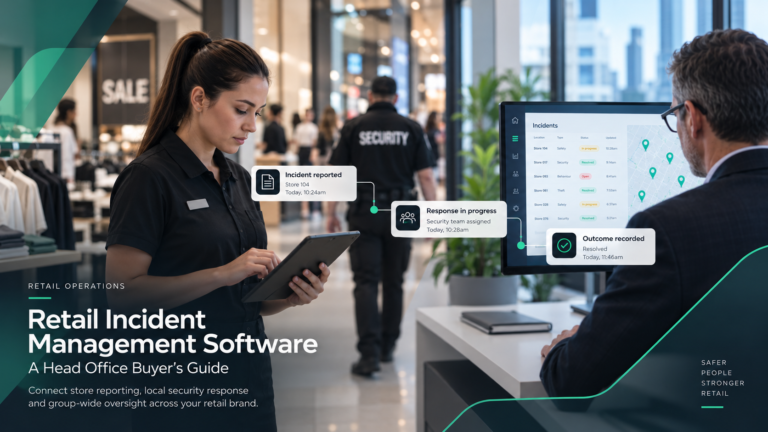
Retail Incident Management Software: 7 Essential Ways Head Office Gains Better Oversight · 11/10/2026 at 10:08 am
[…] the venue-side perspective, read how to improve shopping centre communication. The retail-group view connects those local relationships to the brand’s wider oversight […]
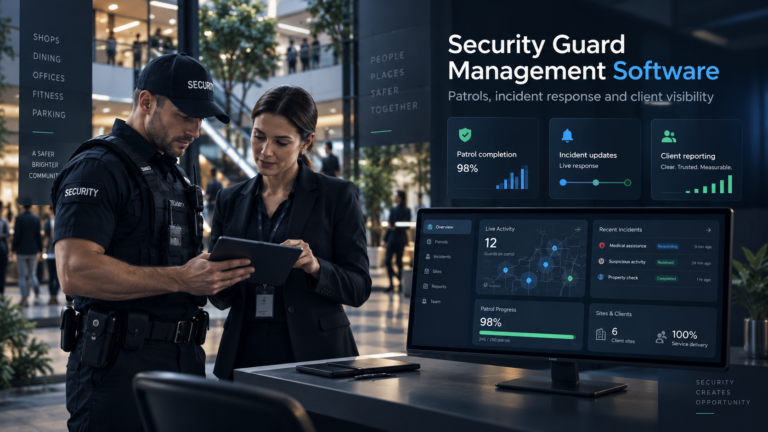
Security Guard Management Software: 7 Ways to Win Contracts · 11/10/2026 at 10:35 am
[…] Explore the client-side context in our guide to improving shopping centre communication. […]
Pub Incident Reporting: An Owner’s Guide to Better Control · 11/10/2026 at 7:06 pm
[…] For a shared site or precinct, see our guide to communication across a multi-tenant venue. […]