If you are looking for an enterprise solution for stadium safety, there is a good chance your venue already has cameras, radios, access control, trained security personnel and established emergency procedures.
The harder problem is what happens after somebody notices something.
A hospitality employee sees an aggressive patron in a concourse.
A medical incident is reported from another section.
Security receives a concern about an unauthorised person near a restricted entrance.
A member of staff notices something unusual near a loading area.
At the same time, venue management needs to know which incidents are active, where they are happening, who is responding and whether any situation requires a wider operational response.
This is where an enterprise stadium safety solution becomes valuable.
The objective is not simply to add another system to the venue.
It is to connect the people responsible for identifying, reporting, receiving, responding to, escalating and reviewing safety and security incidents.
For a modern stadium or arena, that ability to coordinate people can be just as important as the individual security technologies already in place.
What Should an Enterprise Stadium Safety Solution Include?
An enterprise stadium safety solution should connect frontline incident reporting with security response, management oversight, targeted communication and post-event reporting.
For a large stadium or arena, the platform should be capable of supporting different areas of the venue, multiple security teams, external security providers, venue staff and management without giving every user access to the same information.
A strong stadium safety software platform should therefore support capabilities such as:
- Fast incident reporting
- Location and zone-based incident management
- Security assignment and acknowledgement
- Live management oversight
- Role-based access
- Multi-team coordination
- Incident notes and supporting media
- Targeted operational communications
- Security patrol management
- Escalation procedures
- Reporting
- Audit trails
- Multi-venue management
Most importantly, it needs to work when the stadium is busy.
Because the real test of a stadium incident management system is not how impressive it looks during a software demonstration.
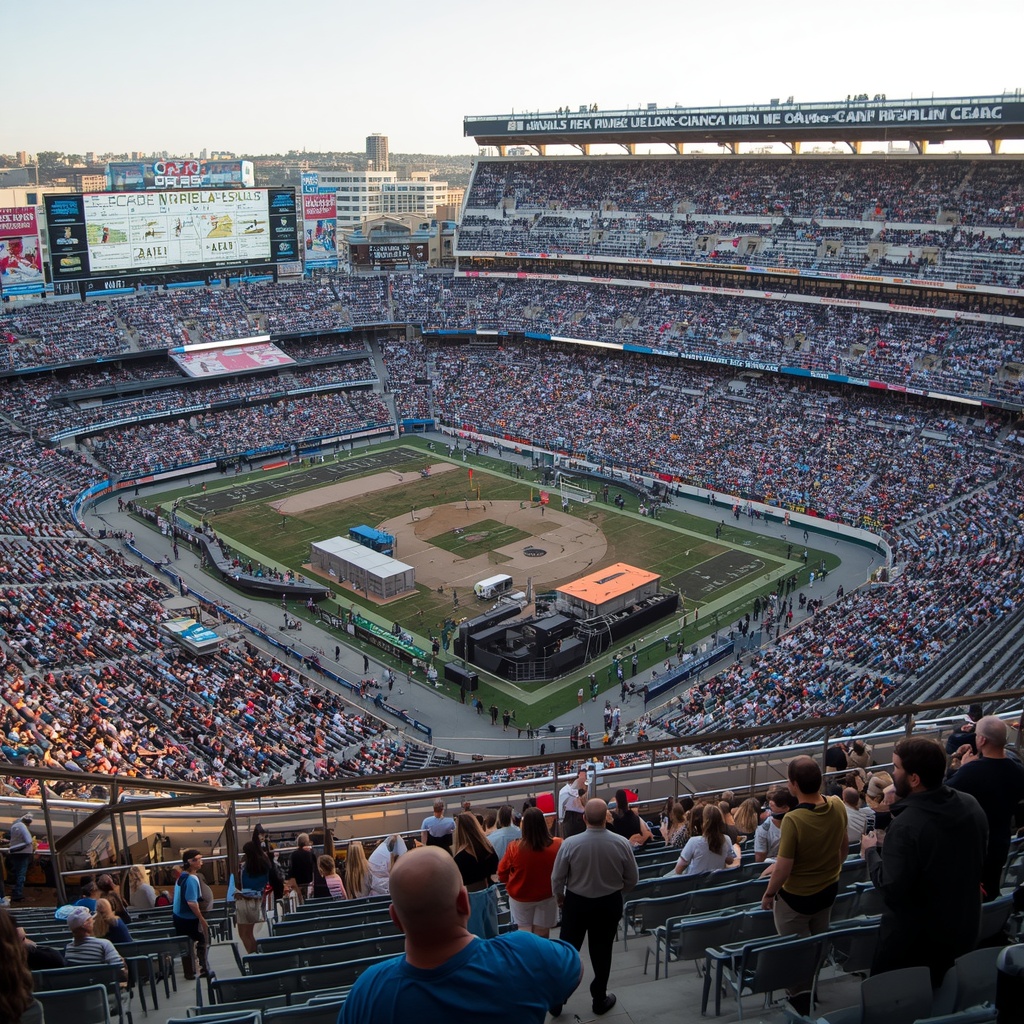
It is what happens when 40,000 people are inside the venue and several things go wrong at once.
The Missing Layer in Many Stadium Security Operations
Modern stadiums already invest heavily in security infrastructure.
CCTV helps teams observe the venue.
Access control helps manage who can enter particular areas.
Radios allow security personnel to communicate.
Screening processes help manage entry.
Emergency plans establish how teams should respond to serious situations.
Professional security personnel provide the people who actually intervene.
All of these are important.
But there is still a coordination problem.
Information can travel through a surprisingly complicated chain.
Imagine that an employee working at a food outlet sees an intoxicated patron becoming aggressive.
The employee tells a supervisor.
The supervisor finds the appropriate number or contacts somebody on radio.
The information reaches security control.
Control attempts to establish exactly where the problem is.
A guard is dispatched.
The supervisor wants to know whether security is coming.
Venue management may not know anything happened unless the incident becomes serious.
Meanwhile, much of the response exists as a combination of radio traffic, phone calls, handwritten notes and individual knowledge.
Now imagine the same thing happening in three parts of the stadium at once.
The problem is no longer simply communication.
It is operational visibility.
An enterprise stadium security platform should create a clearer path from:
Something has happened
to:
The right people know about it
to:
Someone has taken responsibility
to:
Management can see the response
to:
The incident has been resolved and recorded.
That is the role a connected stadium incident management system can play.
Start With the Person Who First Sees the Problem
A useful stadium safety system starts with a very simple question:
How quickly can somebody report that something is wrong?
The first person to identify a security or safety issue may not be a guard.
It might be an usher.
A hospitality employee.
A cleaner.
A retailer.
A facilities worker.
An operations employee.
A contractor.
A member of event staff.
These people are distributed throughout the stadium and may notice developing problems before security control does.
That makes them valuable sources of operational information.
But only if there is an easy way to get that information to the people who can act on it.
Consider a staff member working near Section 214.
They see a confrontation escalating between several patrons.
Instead of leaving their location to find security or working out which person to call, an authorised user could create an incident through a mobile application.
The incident records where the problem is occurring and what is happening.
From there, the stadium security software should help get that information to the appropriate security personnel.
That turns thousands of staff eyes across the venue into a more connected safety network.
The Right Security Team Needs the Incident, Not Everybody in the Stadium
This is particularly important in large venues.
A stadium is not one room.
It may contain dozens or hundreds of operational areas:
- Seating sections
- Concourses
- Corporate suites
- Hospitality areas
- Bars and restaurants
- Retail outlets
- Public entrances
- Staff entrances
- Car parks
- Loading docks
- Service corridors
- Back-of-house areas
- Changing facilities
- External precincts
- Restricted zones
The security officer responsible for one part of the stadium may have no reason to receive routine incidents occurring on the opposite side of the venue.
Sending every incident to every security user can create noise.
And too much noise can make genuinely important information easier to miss.
A more effective enterprise stadium safety solution can use the venue’s operational structure to help route incidents according to areas, zones, assignments and responsibilities.
An issue in one area can reach the security personnel responsible for that area.
A manager can maintain broader visibility.
If the incident escalates, additional personnel can be brought into the response.
This creates a much cleaner operational model:
Local response where appropriate.
Management visibility where required.
Wider escalation when necessary.
Someone Needs to Own the Response
Reporting an incident is only the beginning.
The next question is:
Who is dealing with it?
That sounds obvious, but in a busy environment it matters enormously.
An enterprise stadium incident management platform should make responsibility visible.
A guard receives the incident.
The guard acknowledges or accepts it.
Management can see that somebody has taken responsibility.
Updates can be recorded while the response progresses.
If another person needs to become involved, they can be added.
If the original responder cannot attend, the incident can be reassigned.
The important difference is that the incident now has operational ownership.
The employee who reported it does not need to wonder whether their message disappeared into the system.
The security manager does not need to ask over radio whether anybody is dealing with Section 214.
The platform provides a shared record of the response.
Your Security Control Team Needs the Bigger Picture
Now imagine a sold-out event.
The Section 214 incident is still active.
A medical emergency has been reported near another concourse.
Security is dealing with an access issue near a service entrance.
An aggressive patron has been removed from a hospitality area.
Another report has just arrived from outside the stadium.
Each incident may be manageable individually.
But somebody needs to understand what is happening collectively.
This is where stadium safety software becomes more than an incident reporting application.
Security management needs a live operational picture.
Which incidents are active?
Where are they occurring?
Which incidents have already been assigned?
Which responders have accepted them?
Which incidents remain unresolved?
Which situations appear to be escalating?
Are several reports occurring in the same part of the stadium?
Does management need to redirect resources?
A good enterprise platform allows managers to move above the individual incident and understand the wider security operation.
That becomes increasingly important as venue size and event complexity increase.
A Stadium Is Not One Organisation
Another challenge becomes obvious when you look at who actually operates inside a major stadium.
There may be a stadium operator.
An external security provider.
An event organiser.
Food and beverage operators.
Retailers.
Corporate hospitality teams.
Facilities contractors.
Cleaning companies.
Medical personnel.
Event staff.
Police and emergency services.
Each organisation may have its own people, responsibilities and management structure.
Yet during a safety or security incident, several of them may need to interact.
This creates a genuinely enterprise-level access problem.
Everybody cannot simply have administrator access to everything.
A hospitality employee may need to report an incident and follow an incident they are participating in.
A security guard needs access to relevant security incidents and operational tasks.
A security manager needs much broader oversight.
Venue management may require venue-wide visibility.
Senior management may need reporting across multiple events or even multiple venues.
The platform therefore needs to understand roles, organisations and operational scope.
This is an area where generic messaging tools struggle.
Creating more group chats does not create an enterprise security architecture.
A purpose-built venue safety management system can allow different participants to work within the same operational environment while controlling what each person can see and do.
When an Incident Becomes Bigger Than an Incident
Most security situations remain relatively contained.
Some do not.
A routine report can become a wider safety problem.
A suspicious item may require part of the venue to be cleared.
A threat may require lockdown or invacuation procedures.
A fire or infrastructure problem may require evacuation.
Severe weather may change venue operations.
A serious crowd issue may require coordinated intervention across several zones.
At that point, ordinary incident management becomes operational coordination.
Management may need to issue instructions quickly.
But those instructions may not be identical for everyone.
Security personnel may need one message.
Staff in a particular part of the stadium may need another.
Operations personnel may need specific instructions.
Management may need to reach everyone within selected areas.
An enterprise safety platform should therefore support targeted communication based on who needs to receive the information.
This is particularly relevant in the United Kingdom.
Current UK guidance relating to the Terrorism (Protection of Premises) Act 2025, commonly known as Martyn’s Law, identifies public-protection procedures including evacuation, invacuation, lockdown and communication. Current SIA guidance describes an enhanced tier for qualifying premises where 800 or more people may reasonably be present at the same time.
Technology alone does not create an emergency plan or fulfil a venue’s legal obligations.
But the right stadium security management software can help teams execute established procedures by improving communication, incident visibility and operational coordination.
The Incident Should Build Its Own Operational History
During a security event, people are understandably focused on solving the immediate problem.
Later, different questions emerge.
When was the incident first reported?
Who reported it?
Where did it happen?
When did security receive it?
Who accepted responsibility?
How quickly did somebody respond?
What happened next?
Were photographs or other evidence captured?
Who else became involved?
What decisions were made?
When was the incident resolved?
A properly designed stadium incident management system can create much of this history naturally as the incident progresses.
That matters for several reasons.
Management can review serious incidents.
Security providers can demonstrate their response.
Venue teams can investigate recurring problems.
Reports can be generated from structured operational information.
Training opportunities can be identified.
And when somebody asks what actually happened during an event, management has something better than memory and fragmented radio records.
Supporting Evidence Should Stay With the Incident
Sometimes text alone is not enough.
A guard may need to photograph damage.
A staff member may identify an object or area of concern.
Management may need visual evidence of an obstruction.
A responder may need to provide information that helps another team understand the situation before arriving.
Keeping relevant notes and media with the incident creates a much clearer operational record.
Instead of evidence being scattered through personal phones, messaging applications and email chains, authorised participants can contribute to the incident itself.
This is one of the practical differences between using general communication tools and using dedicated stadium safety software.
Security Work Continues When Nothing Is Going Wrong
A strong stadium safety strategy is not only about responding after an incident occurs.
A significant amount of security work is preventative.
Patrols may be required through:
- Public concourses
- External areas
- Car parks
- Service corridors
- Restricted locations
- Loading areas
- Hospitality spaces
- Perimeter locations
- Critical infrastructure areas
- Sections of the stadium not currently occupied
Management may need to know whether these patrols are actually occurring.
A connected platform can support patrol schedules, routes, checkpoints and evidence of completion.
If a guard identifies a problem during a patrol, that problem can then become an incident within the same security environment.
This creates continuity between proactive security work and reactive incident response.
Instead of patrol management being isolated from incident management, both become part of the stadium’s wider security operation.
Good Stadium Safety Software Helps Management Find Exceptions
Consider a stadium security manager responsible for hundreds of activities during an event.
Most of them will be routine.
Most patrols will happen.
Most areas will remain appropriately covered.
Most incidents will be handled correctly.
Management should not have to manually inspect every normal activity to discover the things that matter.
Enterprise software should help surface exceptions.
A missed patrol checkpoint.
A security area without expected coverage.
An incident that remains unresolved.
A response that appears unusually slow.
Multiple incidents occurring within the same location.
Repeated problems involving the same operational area.
This is how digital systems can help management operate at scale.
The objective is not to create more dashboards.
It is to direct management attention toward situations that actually require it.
What Happens After 50 Events?
The real value of structured stadium incident data becomes even clearer over time.
One event tells you what happened tonight.
Fifty events can start telling you how the stadium behaves.
Perhaps one entrance produces far more incidents than others.
Maybe one section repeatedly generates alcohol-related problems.
Certain event types may produce different incident patterns.
Particular periods before, during or after events may require more resources.
One operational area may regularly experience access-control problems.
A particular patrol route may generate recurring observations.
That information can inform better decisions.
Staffing can be reviewed.
Patrol routes can change.
Physical-security measures can be reassessed.
Management can discuss recurring issues with security providers.
The venue moves from simply recording incidents to learning from them.
This is an important distinction when evaluating an enterprise solution for stadium safety.
Do not only ask whether the software can record what happened.
Ask whether it will help your organisation understand what keeps happening.
What Changes When You Operate More Than One Stadium or Venue?
For a single venue, stadium safety management is already complex.
For an organisation managing multiple venues, another layer appears.
Corporate management may want to understand safety operations across an entire portfolio.
Which venues are generating the most incidents?
What incident categories are common?
Are response patterns consistent?
Where are serious incidents occurring?
Are security providers meeting operational expectations?
Are particular safety issues appearing across several properties?
A true enterprise stadium safety platform should be capable of scaling above the individual venue.
Local teams still need to run their own operations.
But authorised portfolio-level users may need broader visibility.
The same principle applies to security providers.
A security company providing guards or patrol services across multiple stadiums, arenas or event venues needs a way to oversee the part of the security operation for which it is responsible.
That is where role-based and portfolio-based access becomes especially valuable.
Stadium Safety Software for the United States
For stadiums and arenas in the United States, large-event safety planning is inherently multidisciplinary.
The U.S. Cybersecurity and Infrastructure Security Agency’s Mass Gathering Security Planning Tool is designed to support planning for mass gatherings and specifically refers to collaboration among planning-team members, law-enforcement personnel and first responders.
That collaborative model reflects the reality inside a stadium.
Safety does not belong to one person or one device.
It is delivered through coordination between people.
For an American stadium operator evaluating stadium security software, the practical question should therefore be:
Does this platform improve the way our existing teams work together?
Can staff raise incidents?
Can security receive them?
Can management see the response?
Can responsibilities remain clearly separated?
Can information be escalated when necessary?
Can the stadium retain an operational record afterward?
That is where an enterprise platform can complement the physical-security infrastructure already deployed throughout the venue.
Stadium Safety Software for Canada
Canadian stadium and event operators face a similar coordination challenge.
The people responsible for managing a large sporting event may span venue operations, security, event staff, emergency services, contractors, vendors and other stakeholders.
For Canadian venues evaluating venue safety software or an arena safety software platform, the same principle applies:
The technology should make communication and responsibility clearer.
A stadium should be able to maintain local operational structures while connecting the relevant people when an incident requires action.
That becomes especially important at large events where temporary workers, contractors and external organisations may be operating alongside the venue’s permanent teams.
Enterprise software needs to accommodate that complexity without making frontline reporting complicated.
Stadium Safety Software for the United Kingdom
For UK stadium operators, the ability to turn procedures into coordinated action is becoming especially relevant.
The Terrorism (Protection of Premises) Act 2025 establishes a framework for qualifying premises and events, with current SIA guidance describing standard-tier premises at 200–799 people and enhanced-tier premises where 800 or more people may reasonably be present. The guidance identifies evacuation, invacuation, lockdown and communication among the public-protection procedures that venues may need to consider when the relevant requirements apply.
Home Office guidance specifically refers to large concerts and sports stadiums among the types of larger premises and events for which additional protective measures may be relevant.
For a stadium, this reinforces an important operational question:
When a procedure needs to be activated, how quickly can the organisation coordinate the people responsible for carrying it out?
NevaSolo should be viewed as supporting that operational process — not as replacing security planning, professional advice or the venue’s legal obligations.
Better Coordination Does Not Have to Mean More Surveillance
Stadium technology discussions frequently focus on adding more cameras, more sensors and more monitoring.
Those technologies can have important security applications.
But another opportunity exists.
Sometimes the most useful improvement is making better use of information that people inside the stadium already have.
A staff member sees something.
They report it.
Security receives it.
Someone responds.
Management sees what is happening.
Additional people are brought in when required.
The response is documented.
That is a fundamentally different proposition from simply increasing passive surveillance.
It is about connecting people around an event that actually requires action.
For stadium operators considering privacy, usability and technology adoption together, that can be an important part of the conversation.
Questions to Ask When Choosing Stadium Safety Software
If you are looking for an enterprise solution for stadium safety, do not begin your software evaluation with a list of 100 features.
Begin with real event-day scenarios.
Take these questions into your next demonstration.
Can a frontline employee report an incident within seconds?
If reporting is difficult, people will revert to phone calls, radios and informal channels.
Does the system understand where the incident is happening?
Location matters inside a stadium. The platform should support meaningful operational areas, zones or locations.
Can the right security personnel receive the incident?
Relevant responders should receive useful information without unnecessarily notifying everybody.
Can management see who has taken responsibility?
There should be a clear transition from reported to assigned to actively managed.
Can venue staff and an external security provider work together?
An enterprise system should accommodate organisational boundaries and different permission levels.
Can additional authorised people be brought into an incident?
Real incidents rarely follow perfect organisational charts.
Can responders add notes and supporting media?
Important information should remain connected to the incident.
Can management see all active incidents in one place?
A stadium control function needs situational awareness above the individual incident.
Can communication be targeted?
Different groups and areas may require different instructions during an escalation.
Can the system support patrol operations?
Preventative security activity should form part of the same overall security environment.
Can the venue reconstruct what happened afterward?
Auditability matters.
Can reports reveal patterns across multiple events?
The system should help management learn from operational data.
Can it scale to multiple venues?
If your organisation operates several properties, portfolio visibility should be considered before implementation.
Can people actually use it while working?
Perhaps the most important question of all.
Enterprise software fails when frontline personnel find it too complicated to use during real operations.
Where NevaSolo Enterprise Fits
NevaSolo Enterprise has been designed around the idea that security operations involve more than security guards alone.
A venue contains different organisations, different roles and different levels of responsibility.
NevaSolo provides a connected environment in which those participants can interact with the security operation according to the access appropriate to them.
For stadium and arena environments, NevaSolo can support a model where authorised staff report incidents directly into the security operation.
Relevant security personnel can receive and manage those incidents.
Security managers can maintain broader oversight.
Incidents can be assigned, acknowledged and updated.
Notes and supporting media can remain connected to the response.
Venue areas and zones can help structure security coverage and incident routing.
Operational communications can be directed toward appropriate audiences.
Patrol operations can support preventative security activity.
Reporting and audit trails preserve information for later review.
And organisations operating across multiple locations can be given appropriate portfolio-level visibility.
The aim is not to replace the cameras, radios, access-control systems, security personnel or emergency procedures a stadium already has.
NevaSolo is designed to connect the people responsible for acting when those systems and procedures tell you something needs to happen.
What This Could Look Like During a Real Event
Imagine a Saturday evening fixture.
The stadium is close to capacity.
A hospitality employee in the eastern concourse reports an aggressive patron.
The incident is created with the relevant location.
Security responsible for that area receives it.
A guard accepts the response.
Security management can see that somebody is dealing with it.
A photograph or note is added if necessary.
The situation is resolved.
At almost the same time, another staff member reports a medical issue elsewhere in the venue.
A separate security concern arises around a service entrance.
Those incidents are managed independently by the people responsible for them.
Management sees all three.
Then another report arrives.
Several incidents are now developing around one part of the stadium.
The significance is no longer contained to one report.
Management can recognise the wider pattern.
More resources can be directed there.
Additional authorised people can be brought into the response.
If the situation develops further, communications can be escalated according to the stadium’s established procedures.
Afterward, management can review what happened.
Not from memory.
Not by trying to reconstruct several radio conversations.
From the operational record created while the response actually occurred.
That is what connected stadium safety looks like.
The Best Enterprise Stadium Safety Solution Should Make Your Existing Operation Stronger
A stadium does not become safer simply because another piece of software has been purchased.
The technology needs to improve how the existing operation functions.
Your guards should still be guards.
Your control room should still manage the security operation.
Your venue managers should still make management decisions.
Your emergency procedures should still determine how serious situations are handled.
Your existing security infrastructure should continue performing the functions it was designed to perform.
The software should make it easier for those pieces to work together.
That is the standard stadium operators should use when evaluating enterprise stadium safety software.
Does it remove communication friction?
Does it make responsibility clearer?
Does it improve situational awareness?
Does it connect frontline staff with the security operation?
Does it give management a better picture?
Does it preserve what happened?
Does it scale when the venue becomes busy?
And will people actually use it?
If the answer to those questions is yes, the technology is solving an operational problem rather than simply adding another dashboard.
Conclusion: Choosing an Enterprise Solution for Stadium Safety
If you are looking for an enterprise solution for stadium safety, start by looking at how information currently moves through your venue.
Follow one incident from beginning to end.
Someone notices a problem.
How do they report it?
Who receives it?
How does somebody take responsibility?
How does management know a response is underway?
How do other authorised people become involved?
What happens if the situation escalates?
How do you communicate instructions?
And after everything is over, can you clearly reconstruct what happened?
Then repeat that thought experiment with five incidents occurring simultaneously during a capacity event.
That is the environment your technology needs to support.
The strongest stadium safety software should not merely create digital incident reports.
It should help create a connected safety and security operation.
One in which frontline staff can raise concerns quickly.
Security personnel can respond efficiently.
Security managers can maintain situational awareness.
Venue management can see what matters.
Different organisations can participate without losing appropriate access controls.
Serious situations can be escalated.
And the venue retains a reliable operational history after the crowd has gone home.
That is the problem NevaSolo Enterprise has been designed to help solve.
NevaSolo connects the people, security teams, locations and operational information involved in keeping a major venue running safely.
For stadiums and arenas in the United States, Canada, the United Kingdom and other markets, NevaSolo Enterprise can provide the digital coordination layer between the people who identify an incident and the people responsible for resolving it.
See how NevaSolo Enterprise could work across your stadium, arena or major venue, using your security structure, your operational areas and your real event-day workflows.
0 Comments