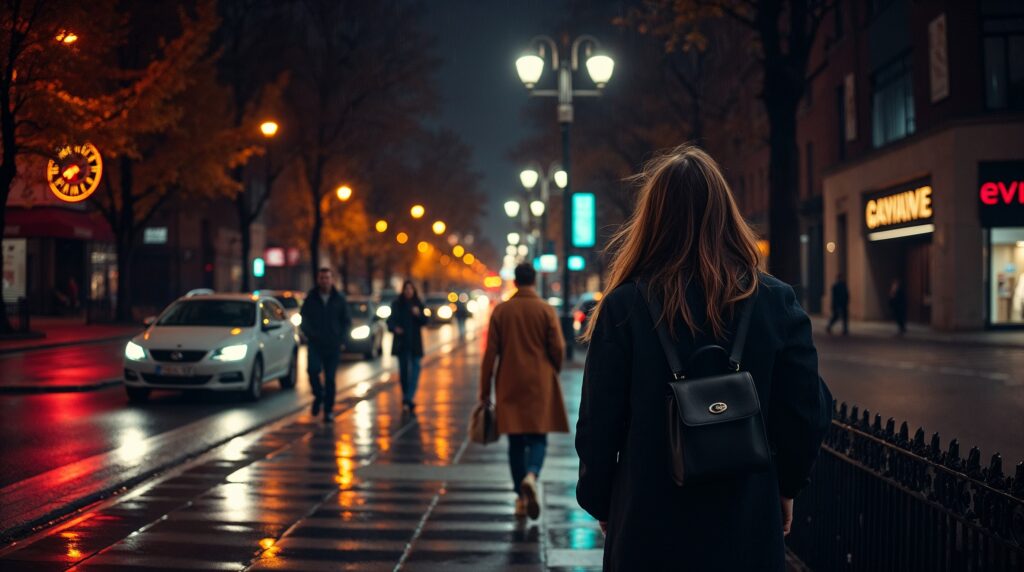
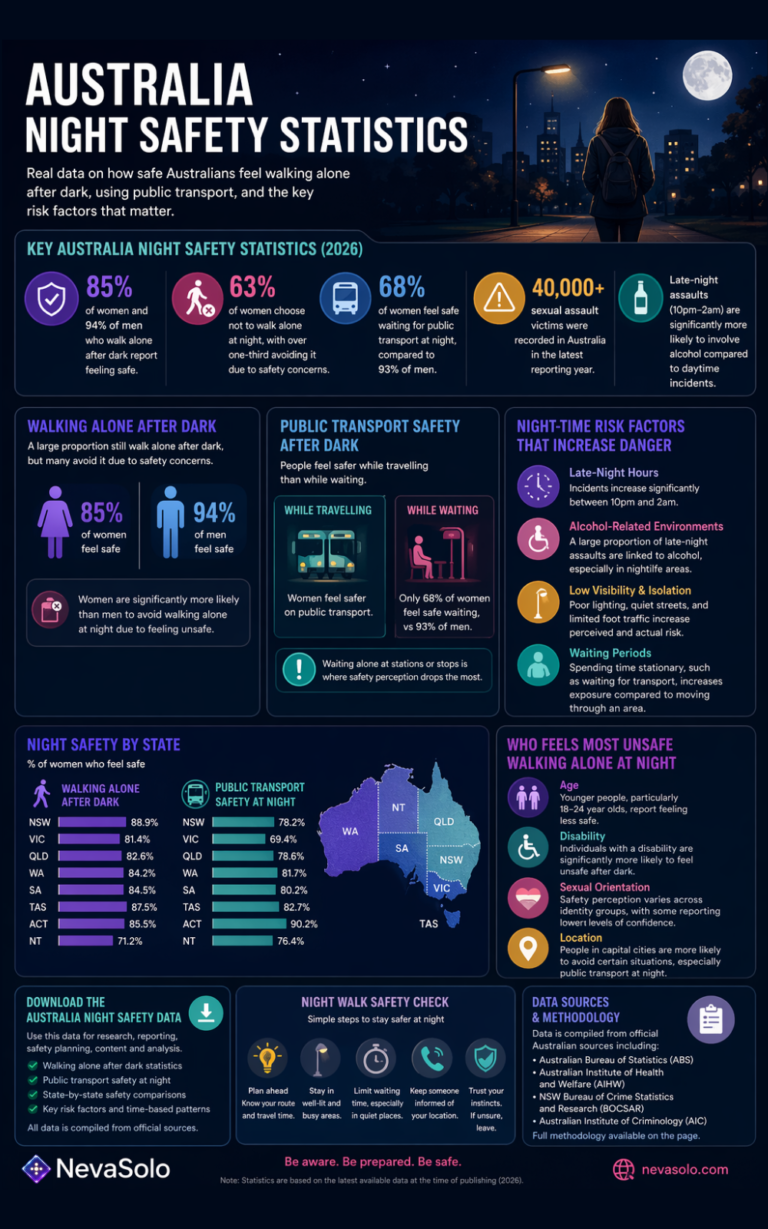
Walking home after dark should feel normal, not stressful. But for a lot of people, it does not. The latest ABS feeling of safety data shows a clear gap between women and men when it comes to feeling safe walking alone at night in their local area. That is exactly why a simple safety plan matters. It does not need to be dramatic. It just needs to be practical, repeatable, and easy to use when you are tired, distracted, or in a hurry.
Whether you are leaving work, getting off public transport, walking back from dinner, or heading home after the gym, the goal is the same: make it easier to stay aware, harder for someone to isolate you, and quicker to get help if something feels wrong.
Start before you leave
Good personal safety usually starts before the walk does.
If you know you will be out after dark, take 30 seconds to plan your way home. Pick a route you already know. Charge your phone. Keep it easy to access. Let one trusted person know when you are leaving, where you are heading, and roughly when you expect to arrive. If your plans change, send a quick update instead of assuming it will be fine. Queensland Police recommends carrying a mobile phone, advising a responsible person of your expected arrival and route, and having a plan for how you will get home.
This is also the best time to decide what you will do if something feels off. Where is the closest well-lit shop, servo, station, hotel lobby, security desk, or busy venue on your route? If someone made you uncomfortable, where would you go instead of continuing home? A plan made early is much easier to use under pressure.
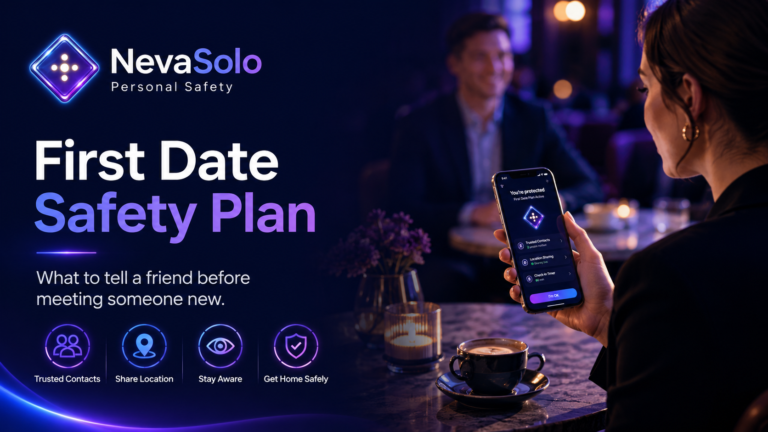
The most important thing you can do is ensure your Trusted Contacts can see what’s happening if something isn’t right. When emergency is activated, it sends your video and location to your Trusted Contacts.
Choose the safest route, not just the shortest one
The fastest route is not always the best route.
A good night-time route has light, visibility, traffic, and people around. That usually means main roads, active streets, and places where someone could see you if you needed help. Queensland Police specifically advises avoiding shortcuts through parks, vacant land, dark areas, and isolated spaces, and using busy, well-lit streets where possible.
That one choice changes a lot. If you stay in visible areas, you reduce the chance of being caught off guard. You also give yourself more options if you need to change direction, step into a business, or ask someone specific for help.
If you are leaving a workplace, event, or venue late, do not default to walking alone if there is a better option. Ask a colleague to walk with you. Book a rideshare from a well-lit area. Time your walk to match bus or train arrivals. If someone can meet you for the last part of the trip, use that option.
Stay alert without looking panicked
You do not need to act frightened to stay switched on.
The best mindset is calm and aware. Walk with purpose. Keep your head up. Notice who is around you. Check what is happening ahead, not just what is on your screen. Queensland Police advises being aware of your surroundings, especially when using headphones or speaking on your mobile, and to use your feelings of safety as a guide if a stranger approaches.
That does not mean you need to be hyper-vigilant every second. It just means you do not make yourself easy to distract. If you want music or a podcast, keep the volume low enough that you can still hear what is happening around you. If you are on your phone, keep moving with awareness rather than staring down at the screen for blocks at a time.
Small habits matter here. Know where your keys are. Keep your bag zipped. Keep your route simple. The less you fumble, the easier it is to stay in control.
If something feels off, act early
A lot of people wait too long because they do not want to overreact.
You do not need certainty to make a smart move. If someone is hovering, following, calling out to you, or making you uneasy, change something early. Cross the road. Step into a busy shop. Move toward light and other people. Call someone you trust. If you are near public transport, head for the staffed or busier area. Queensland Police advises removing yourself from the situation if you feel unsafe, waiting near other people in well-lit areas, and seeking help from specific passengers or staff if your safety is threatened.
You also do not need to stay polite. Personal safety is more important than social comfort. If someone is pushing your boundaries, you are allowed to ignore them, move away, or be direct.
If you think someone may be following you, do not go straight home. Go somewhere visible and public instead. A convenience store, service station, busy takeaway, hotel foyer, station platform, or security point is a better decision than leading the problem to your front door.
Be deliberate on public transport
Public transport safety is really about the transitions.
A lot of people focus on the train or bus itself, but the more exposed moments are often the wait, the platform, the walk to the stop, and the stretch between getting off and getting home. Queensland Police recommends avoiding unnecessary waiting, planning your travel in advance, waiting in well-lit areas near other people, and having a plan to get to your car or home when you get off public transport. It also advises moving, seeking help, using emergency buttons or phones, and reporting incidents to staff or police if your safety is threatened.
That means practical choices help:
- stand where there is light and visibility
- avoid isolated platform ends
- sit near the driver or guard if the service is nearly empty
- pay attention to who gets off with you
- know your next move before you step off
The less decision-making you leave to the final minute, the more control you keep.
Use technology to make your plan easier
A phone cannot replace judgement, but it can support it.
The best safety tools are simple. Live location sharing. A quick check-in message. A pre-selected emergency contact. A way to alert trusted people fast if a situation escalates. The point is not to make every walk feel dangerous. The point is to make help easier to reach when timing matters.
This is where tools like NevaSolo can fit naturally into a real routine. Instead of trying to explain where you are while stressed, you can build a system around visibility, check-ins, and fast contact with people you trust.
Keep it lightweight. One or two trusted contacts is enough. A simple “leaving now, home in 18” message is enough. A tool only helps if you will actually use it when it counts.
Know when to call for help
If there is an immediate threat, do not hesitate.
Triple Zero says to call 000 for police, fire, or ambulance in life threatening or emergency situations, including when someone is seriously injured, needs urgent medical help, life or property is being threatened, or you have witnessed a serious accident or crime. It also says to call from a safe place, state your location, stay on the line, and answer the operator’s questions.
That matters because when people panic, they often focus on the story instead of the location. Your location is one of the first things emergency services need. If you can, give the street number, street name, nearest cross street, and suburb or town. If you are moving, say the direction you are travelling and the last landmark or stop you passed.
If you have a hearing or speech impairment, Triple Zero also provides the 106 text-based emergency relay service through a TTY. It is not SMS, and it is specifically for emergency help.
Final thoughts
Walking alone at night is one of those situations where tiny decisions add up fast. Your route. Your timing. Your awareness. Your backup plan. Your willingness to act early when something feels off.
You do not need a complicated routine. You need a realistic one.
Choose visible routes. Stay connected. Use tools that make check-ins easier. Move early if a situation changes. And if it becomes an emergency, call for help immediately.
The safest plan is the one you will actually use.
FAQ
Is the shortest route the safest route?
Not always. At night, the better route is usually the one with more light, more visibility, and more people around. Main roads and active streets are often a better choice than dark shortcuts.
What should I do if I think someone is following me?
Do not go straight home. Change direction, go somewhere public and well-lit, and get near other people. If the risk feels immediate, call 000.
When should I call 000 in Australia?
Call 000 if someone is seriously injured, needs urgent medical help, life or property is being threatened, or you have just witnessed a serious accident or crime.
Can I text 000?
Not by SMS. Triple Zero says 106 is the text-based emergency relay service for people with a hearing or speech impairment using a TTY, and emergency services cannot be contacted by standard SMS to 000.
0 Comments